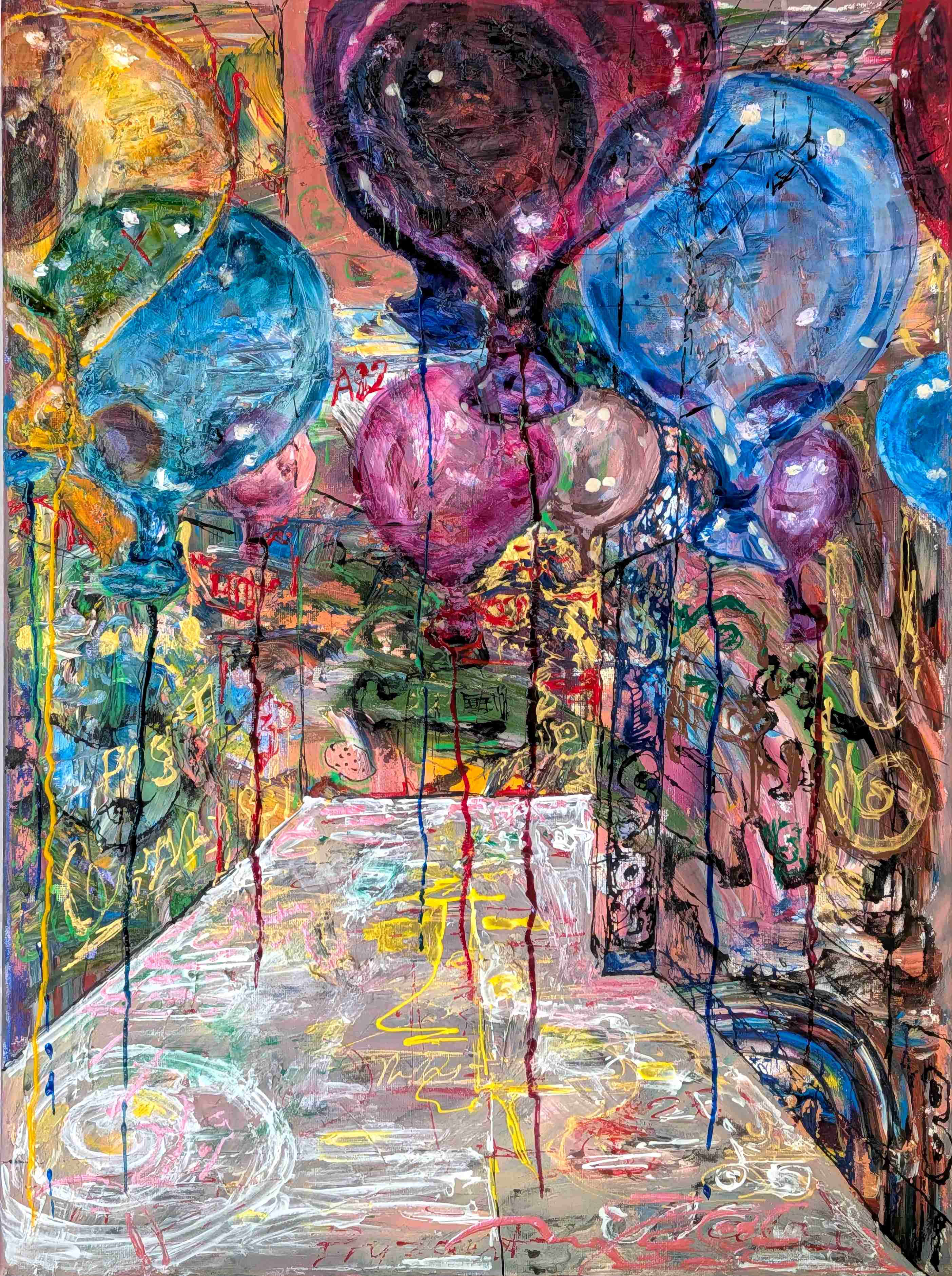
In the modern art world, a compelling new movement is taking root—one that values the history beneath the brushstrokes as much as the final image on the surface. Rather than starting with a pristine, factory-white canvas, contemporary artists are increasingly turning to old, abandoned, or unsuccessful works that have been heavily built up with layers of leftover, unused paint.
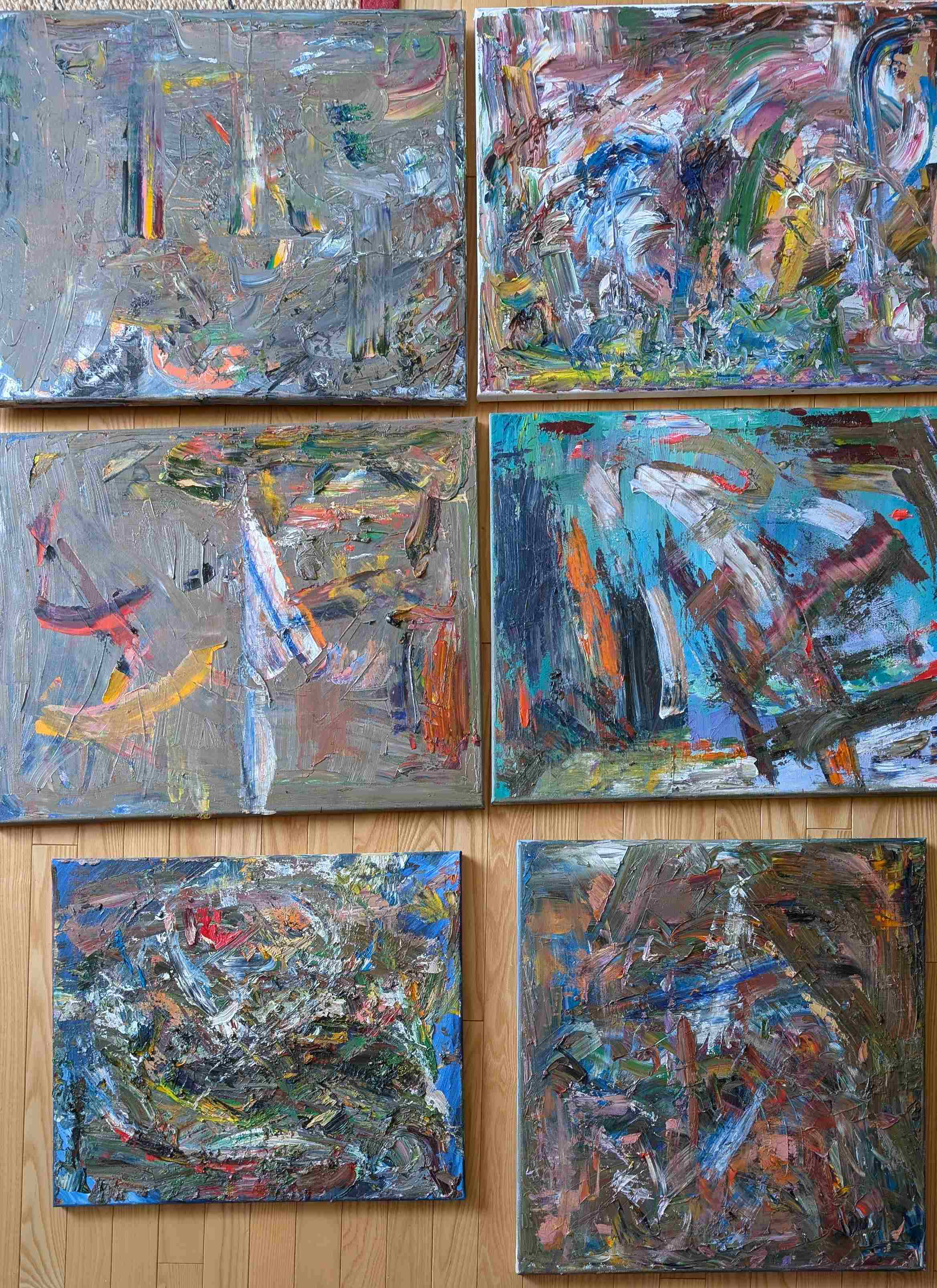
This trend isn't just about eco-friendly recycling or saving on studio expenses; it is a profound conceptual shift. When an artist takes a heavily textured, chaotic substrate—like the heavily encrusted, abstract surfaces seen in base.jpg—they are entering into a direct dialogue with the past.
   [ Layer 1: The Scraping / Leftover Studio Paint ]  --> (Textural History)
                         ↓
   [ Layer 2: The New Vision (Oil Paint Application) ] --> (Emergent Form)
The Magic of the Found Texture
Every artist knows the struggle of dealing with excess oil paint left on the palette at the end of a session. Rather than letting it dry into a useless lump, a growing subculture of painters scrapes, smears, and dollops these remaining pigments onto "sacrificial" canvases. Over time, these canvases become thick, accidental topographies of tone and texture.
When it comes time to paint a new, intentional piece over this topography using rich oil paint, incredible things happen:
-
Built-in Depth: The ridges and peaks of the old paint catch the light, giving the new composition an immediate, tactile presence that smooth linen simply cannot replicate.
-
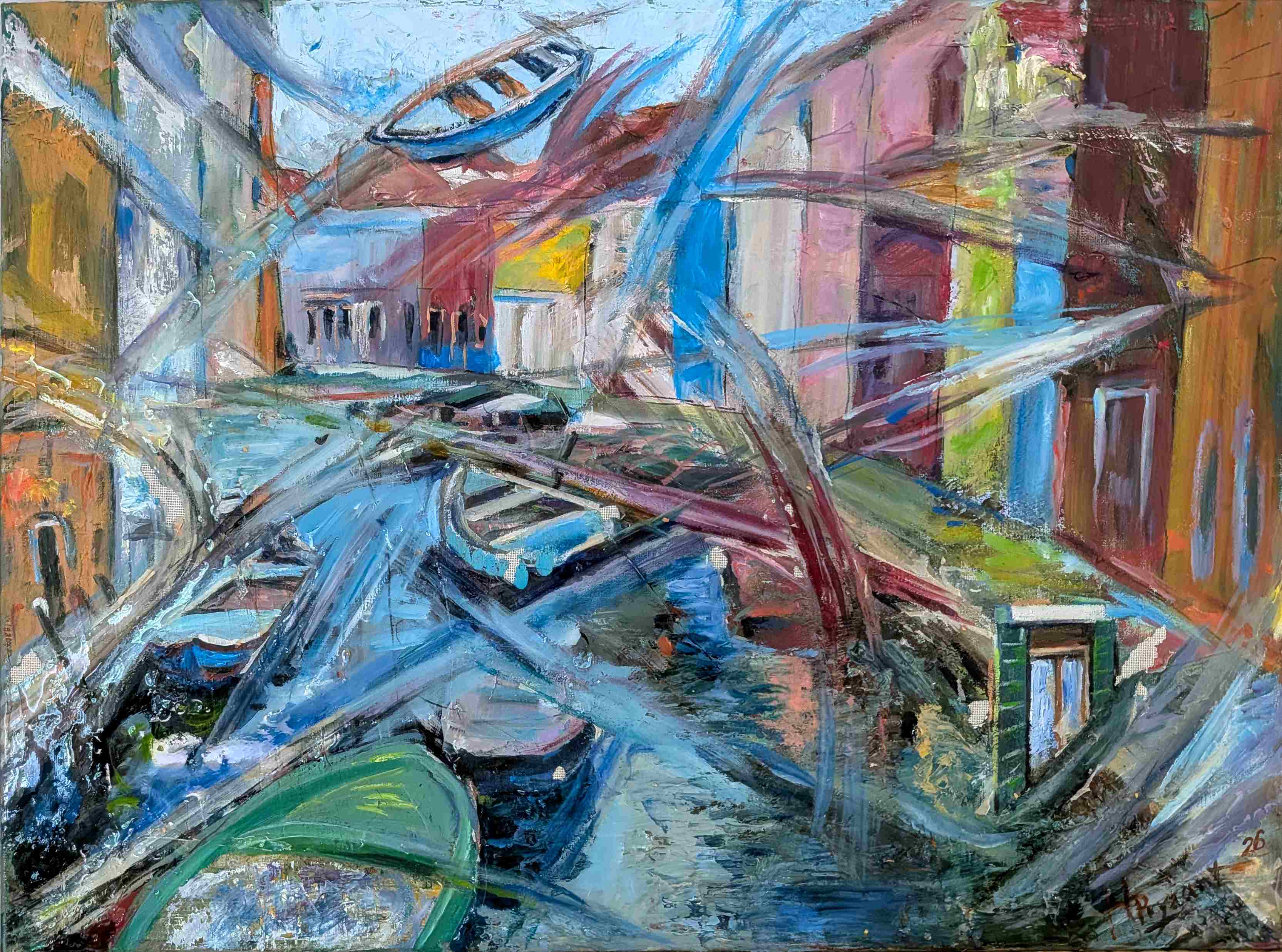
Serendipitous Form: The natural valleys and peaks of the underlying chaos can suggest shapes to the artist. A random swipe of dried impasto from months ago might suddenly become the crest of a ridge line or the architectural edge of a building.
From Chaos to Composition
We can see this brilliant transformation in practice by observing how a textured under-layer evolves into a finished narrative.
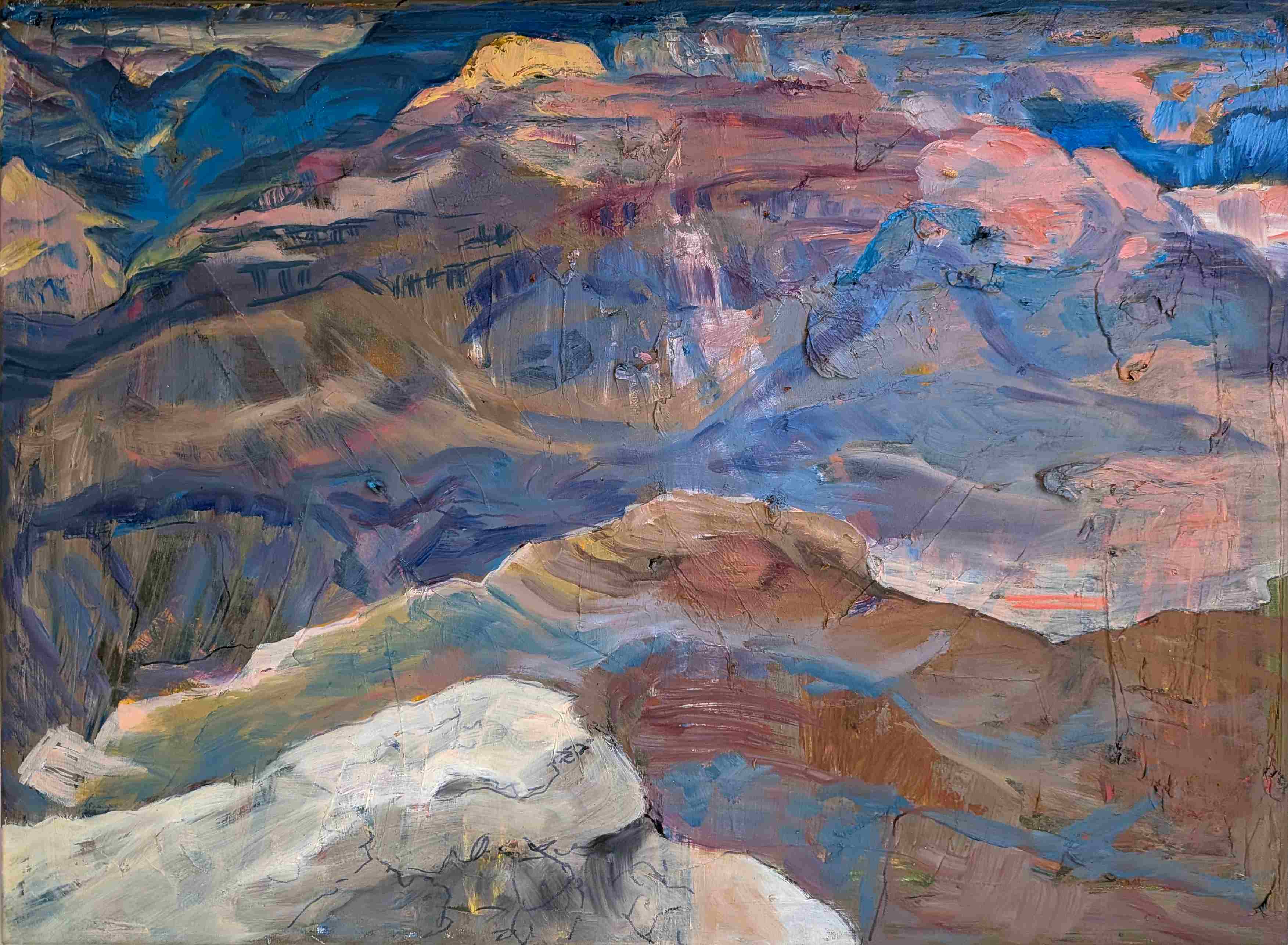
In canyon.jpg, the artist leverages the rugged, chaotic under-layers to mimic the natural erosion, sediment, and deep shadows of a vast landscape. The existing ridges of paint don't fight the composition; instead, they become the physical rock faces, capturing the shifting play of light over earth.
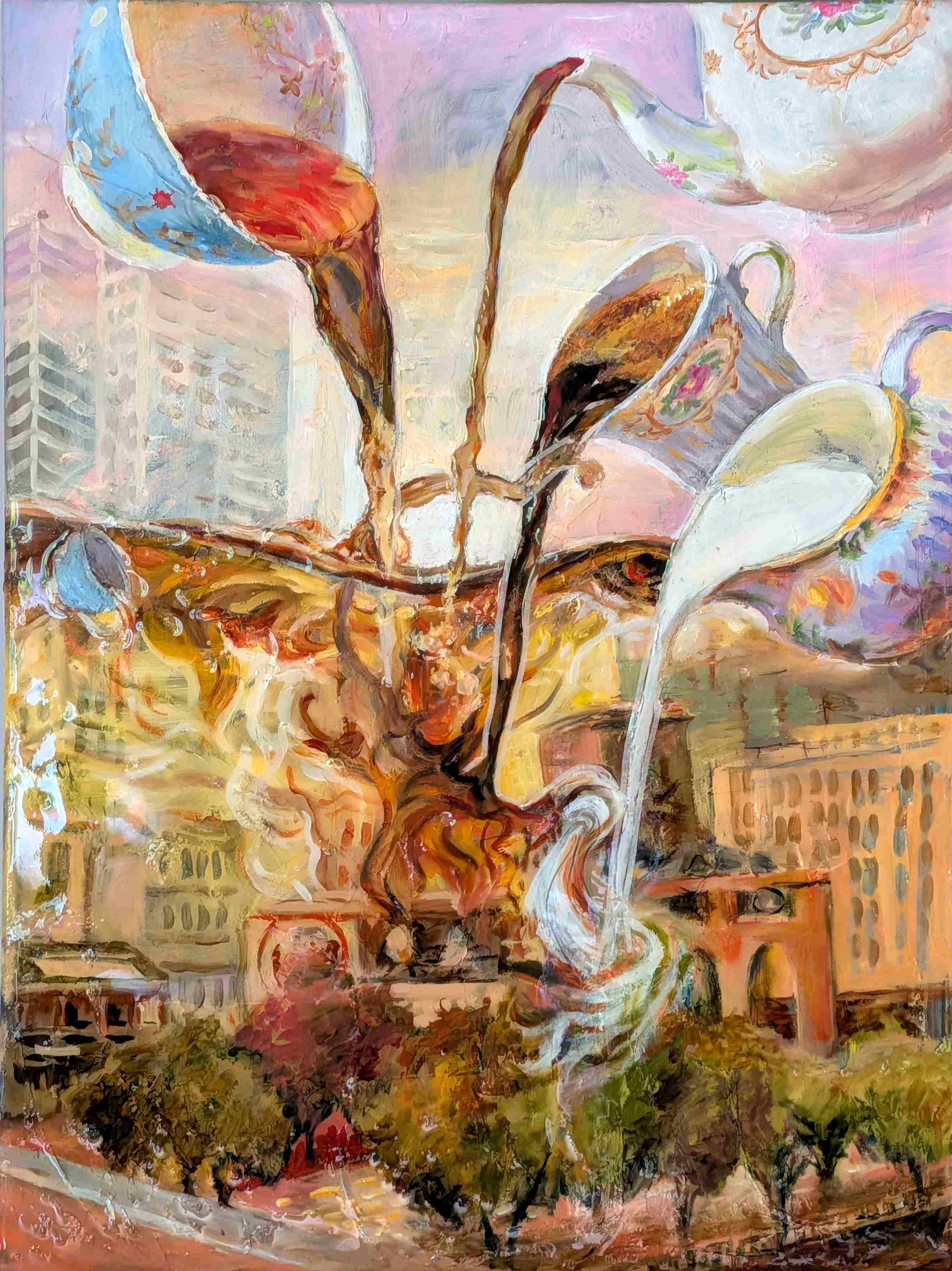
Alternatively, pouring.jpg demonstrates how this heavy textural history can lend a surreal, dreamlike quality to a complex scene. The physical peaks and valleys beneath the surface interact dynamically with the smooth, liquid forms of pouring teacups, milk, and cityscapes. The historical texture breaks up the light, creating a shimmering effect that makes the entire image feel alive, layered, and deeply complex.
Ultimately, this trend reminds us that nothing in the studio is truly wasted. By painting in oil over the remnants of past work, artists are proving that a canvas is not just a flat surface—it is a living archive.